
SKILLS ONTOLOGY
Your Talent Strategy Is Only as Good as the Skills Data Behind It
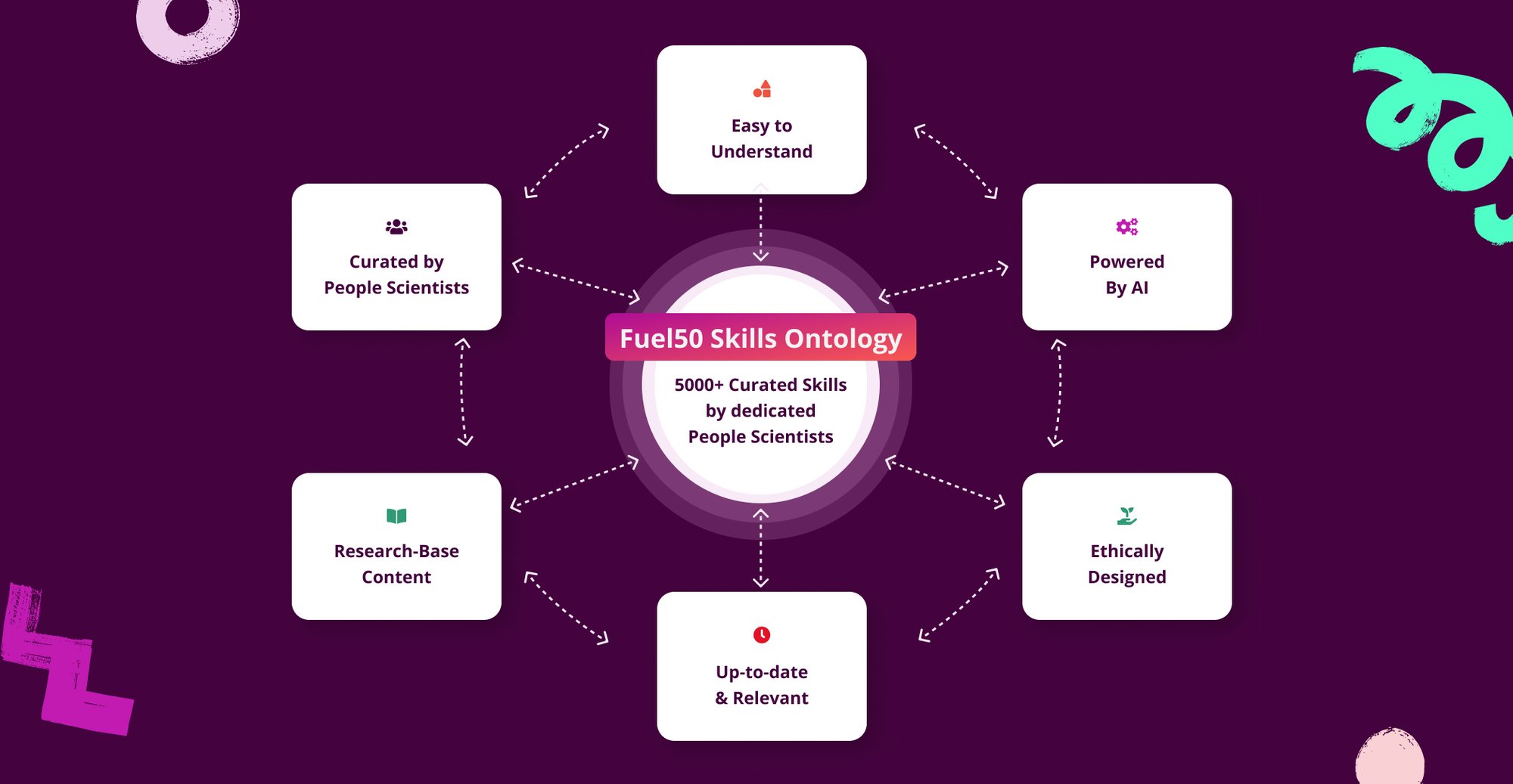
And now that AI powers every recommendation — from career paths to succession pipelines — the stakes are even higher. Fuel50's Skills Ontology is an expert‐driven skills library curated by People Scientists and HR Specialists, not scraped from job boards or auto‐generated without review. With 5,000+ skills, detailed proficiency levels, and built‐in development actions, it's the governed, bias‐reviewed foundation your talent decisions actually deserve. Your HRIS has job titles. This is what sits underneath them.
Trusted by Today’s Leading Skills-Based Organizations







Skills Data Quality Matters
A skills-based organization needs more than a skills list. It needs skills data that stays current, connects to real workforce decisions, and can be trusted by HR leaders, managers, and employees alike.



Create One Shared Skills Foundation
Skills data is often scattered across systems, teams, and job frameworks. Fuel50’s skills ontology brings it into one shared structure, connecting skills, roles, career paths, and opportunities across the business.


Turn Skills Into Better Talent Decisions
Once skills data is effectively structured, HR can use it. Fuel50 connects that shared skills foundation to internal mobility, workforce planning, reskilling, and career growth — so skills strategy drives action, not just analysis.


Keep the Foundation Current and Credible
A skills foundation only works if people trust it. Fuel50 combines a living ontology with governance, AI transparency, and human oversight, so skills data stays current enough to keep up with change and credible enough to use in real decisions.
CURATED BY PEOPLE SCIENTISTS
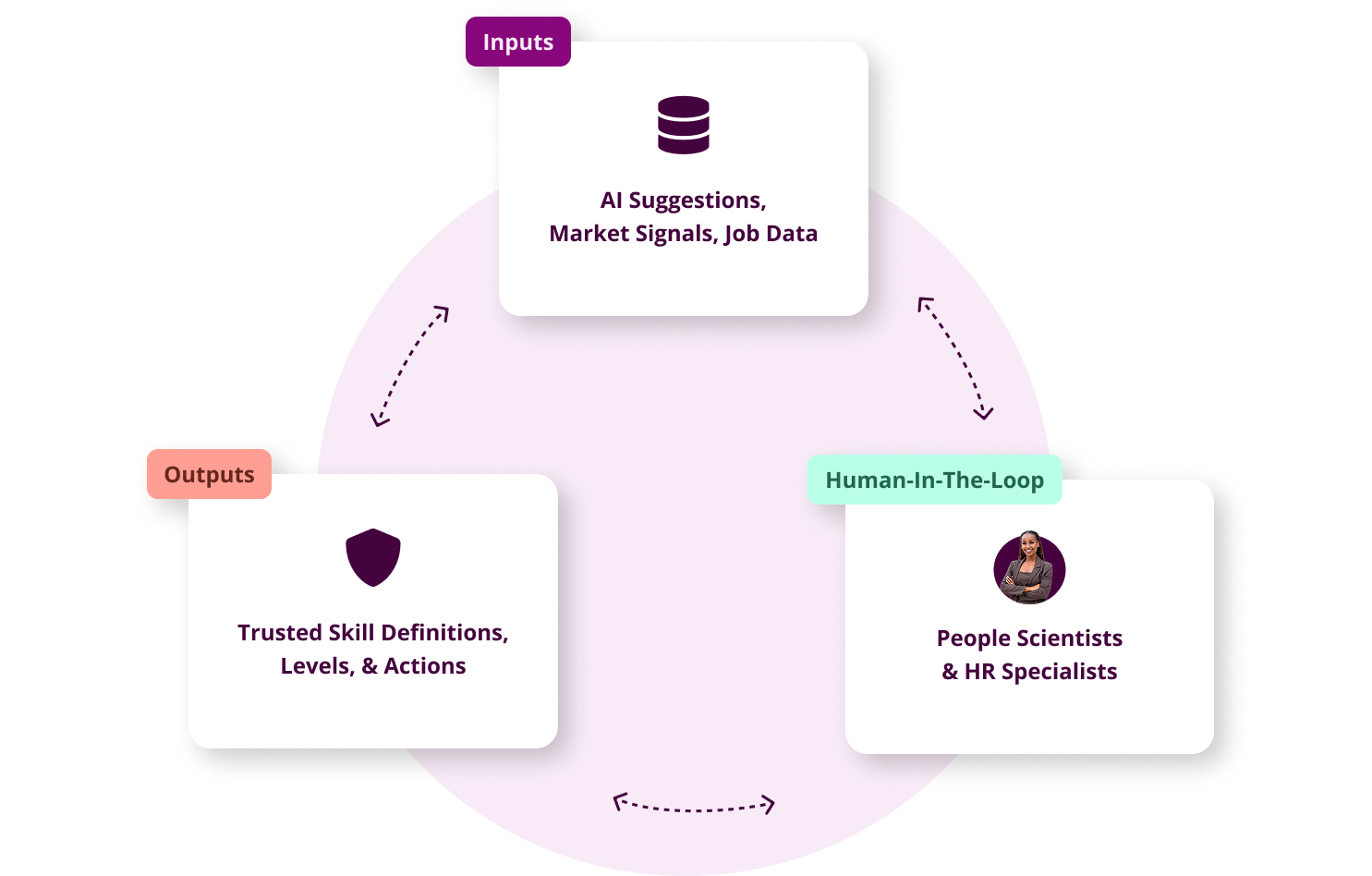
Built by People Scientists and HR Specialists —
Not Algorithms Working Alone
- Every skill in Fuel50’s ontology is defined, structured, and validated by a dedicated team of People Scientists and Skills Specialists, so definitions are precise, consistent, and grounded in behavioral science — not recycled from job postings.
- Proficiency levels and development actions are role‐relevant and multi‐dimensional, giving employees clear, actionable guidance on what “Basic”, “Skilled”, “Advanced”, and “Expert” actually look like in practice.
- This is the difference between a skills list and a skills intelligence platform: Fuel50’s ontology doesn’t just name skills; it defines them, levels them, and connects them to real career and business outcomes.
BIAS‐REVIEWED & DEI‐SAFE
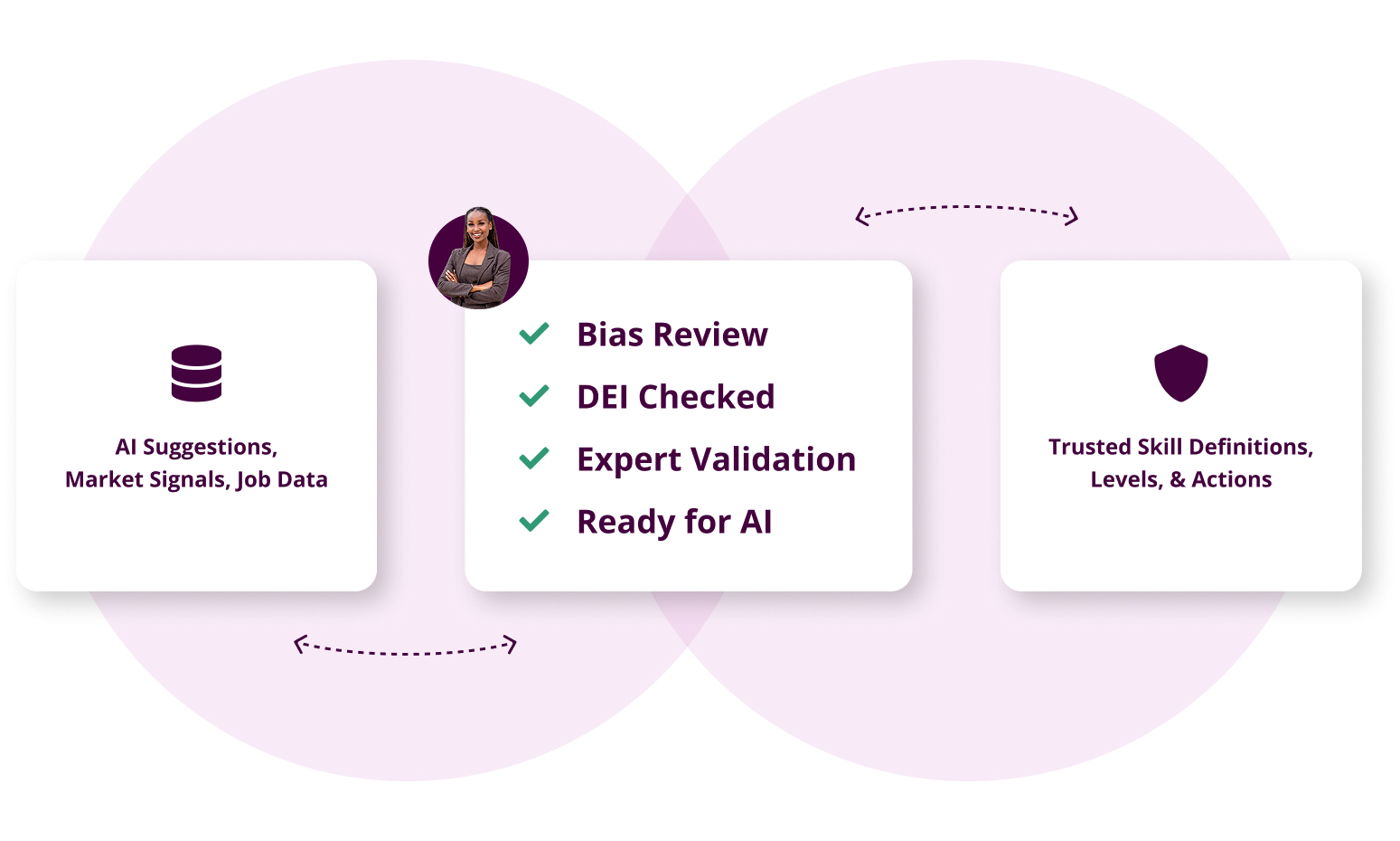
Every Skill Reviewed Through a DEI & Bias-Free Lens, Because Responsible AI Starts With Responsible Data
A skill itself isn’t biased — “Project Management” or “Java” are just skills. Bias creeps in through how a skill is defined, leveled, and “grown.” A leadership definition that rewards a “strong, commanding presence” quietly favours one style of leader over others. A proficiency level that requires “presented to the executive team multiple times” rewards access, not pure capability. A development action like “attend an international conference” assumes budget, visas, and location that not everyone has. If that wording sits in your skills data, any AI that uses it will keep recommending the same kinds of people for the best work. Fuel50’s People Scientists review every skill definition, proficiency descriptor, and development action to catch those patterns before AI ever uses the data.
- Fuel50’s ontology incorporates diversity, equity, inclusion, and belonging reviews across skill definitions, proficiency levels, and development actions to minimize bias in the foundation that powers matching, mobility, and career pathing.
- This isn’t a checkbox. When your skills data is clean, fair, and explainable, every downstream recommendation — from internal moves to succession pipelines — inherits that integrity.
- For organizations operating across regions and demographics, this governance layer protects both your talent strategy and your reputation.
CONTINUOUSLY UPDATED
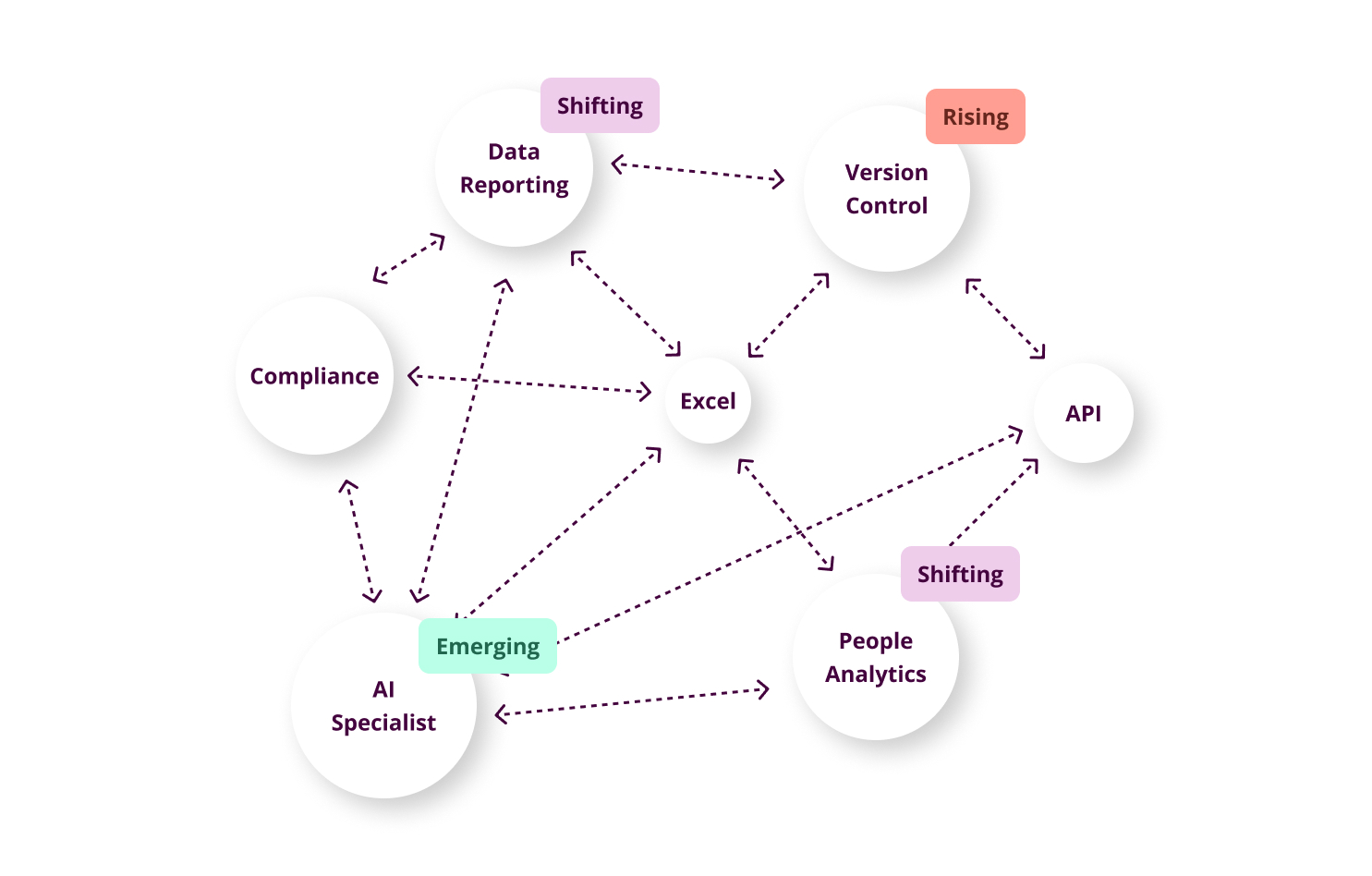
A Living Library that Keeps Pace With the Market — So Your Skills Data Never Goes Stale
-
Fuel50’s ontology is continuously updated based on labour‐market signals and trends, so your skills taxonomy reflects what the market needs today, not what it needed years ago.
- New and emerging skills are added, existing skills refined, and obsolete items retired — helping your organization stay ahead of workforce shifts instead of scrambling to catch up.
- Unlike static libraries created once and left alone, Fuel50’s ontology is a managed, governed asset maintained by people scientists and informed by real‐world usage.
MULTI-DIMENSIONAL
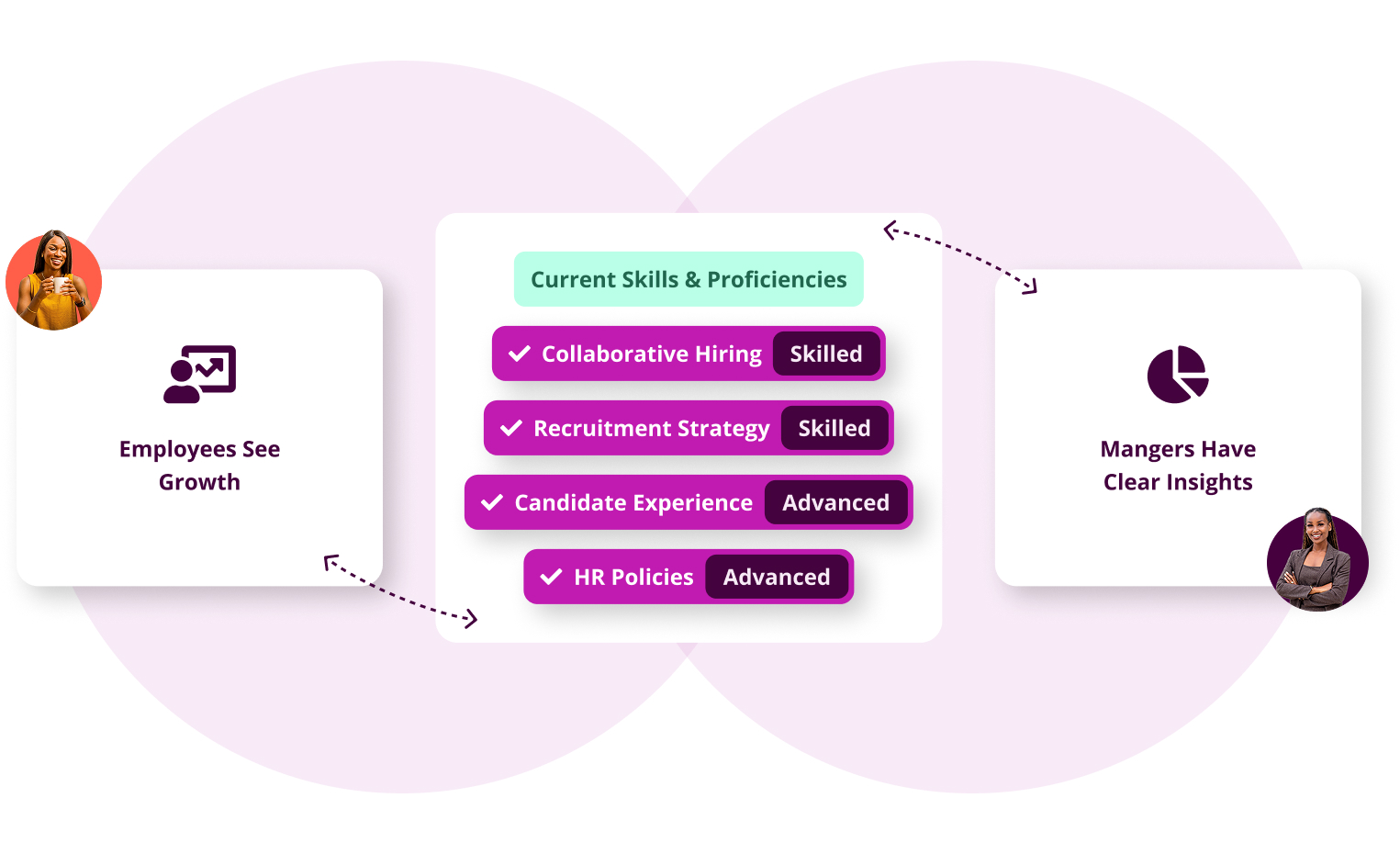
More Than a Name and a Description — Every Skill Comes With Levels and Actions Built In
- Each skill includes a detailed definition, four proficiency levels, and specific development goal actions — giving employees and managers a shared understanding of what good looks like and how to grow toward it.
- Development actions are informed by behavioral science and designed to be practical and role‐relevant, not generic “take a course” suggestions.
- This multi‐dimensional structure connects your ontology to career pathing, internal mobility, gigs, succession, and skills‐based workforce planning — turning a skills library into a true skills intelligence engine.
PLATFORM FOUNDATION
The Ontology that Powers Matching, Mobility, Development — and Every Talent Decision
In-Between
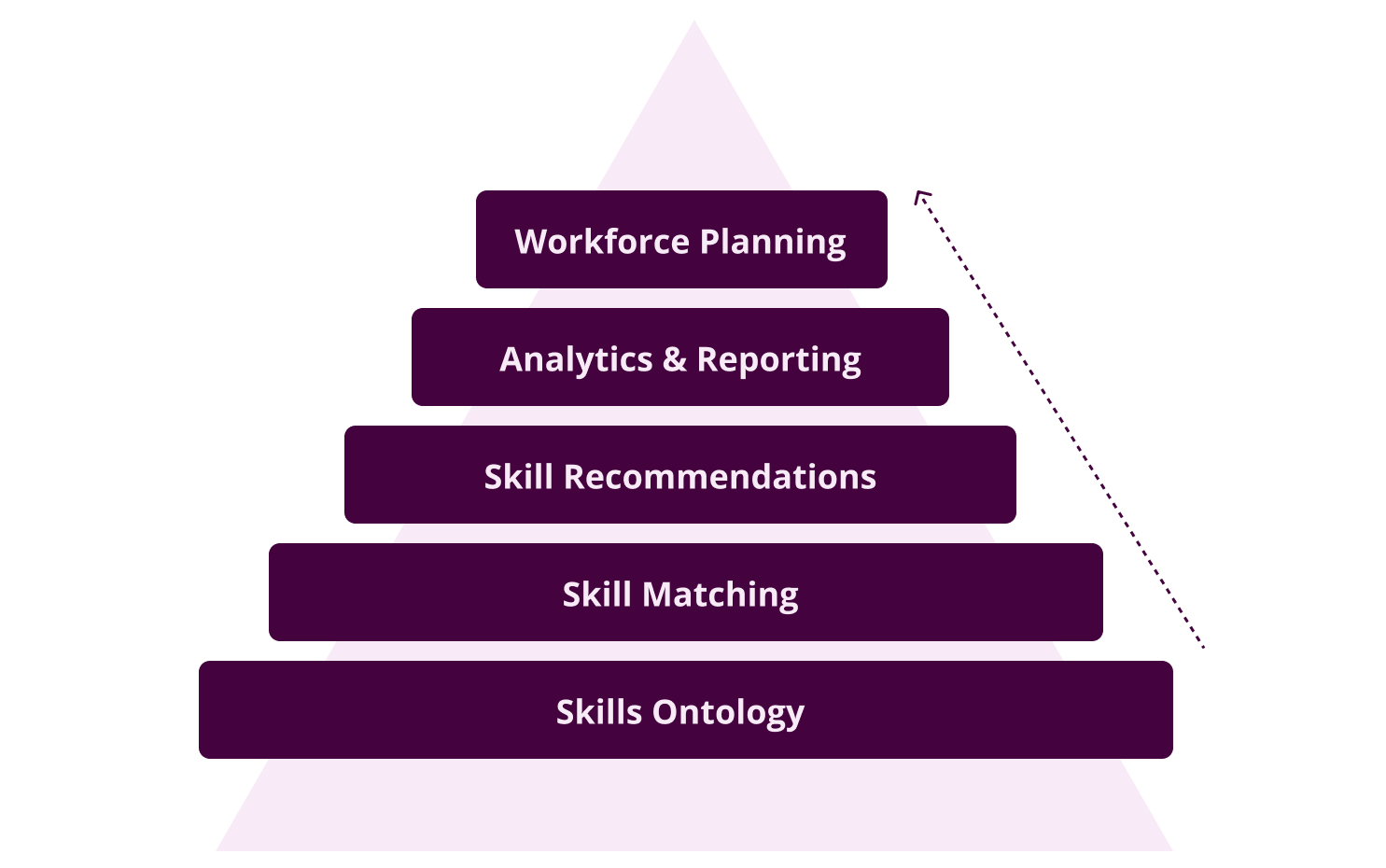
- Fuel50’s Skills Ontology is the foundation layer for Skills Architecture, Skills Inventory, Development, Mobility, Gigs, Succession, Coach, and Insights; every module draws from the same governed, validated skills data.
- Matching stays consistent, recommendations are explainable, development actions are aligned, and analytics are built on data you can stand behind — across products, teams, and regions.
- When the ontology is right, everything downstream gets sharper: better matches, fairer recommendations, faster internal fills, and workforce planning grounded in reality rather than assumptions.
Find Out What People Are Saying
Building a skills foundation that is accurate, unbiased, and trusted across the enterprise is hard
— especially when most vendors skip the hard work. Fuel50 doesn’t.


“The concept of a skills gap is always going to be there. The question is, what is your
organizational strategy to be able to continue to close those gaps when the target is constantly moving on you?
And this is where a platform like Fuel50 becomes very, very powerful.”

Built to Work with Your
Tech Stack
Fuel50 integrates with the HRIS, LMS, and clinical systems you already use, including Workday, SAP SuccessFactors, Oracle HCM, and Epic, so your expert‐driven skills ontology can complement the systems that run your business rather than replace them.
- Pre‐built connectors for Workday, SAP SuccessFactors, and Oracle HCM support secure data flows between your skills intelligence platform and core HR systems.
- API‐friendly architecture for custom integrations so IT and HRIS teams stay in control.
- SSO support for secure, seamless employee access.
- Real‐time data sync for skills, roles, and organizational structure, keeping your talent marketplace platform accurate and audit‐ready.






Success Stories
Fuel50’s expert‐driven skills ontology powers skills‐based transformation for global
industry‐leading brands.



FAQs
What is Fuel50’s Skills Ontology?

Fuel50’s Skills Ontology is a curated library of more than 5,000 skills, each with detailed definitions, four proficiency levels, and development actions, built and maintained by a dedicated team of I/O Psychologists and HR Specialists. It is the behavioral science‐infused foundation that powers every talent decision across the Fuel50 platform.
How is it different from other skills libraries or taxonomies?
Many skills libraries are scraped from job postings, auto‐generated by AI, or licensed from labor‐market data providers. Fuel50’s ontology is expert‐curated, bias‐reviewed, and integrated directly into the platform, so it functions as a governed, multi‐dimensional intelligence layer rather than a static list of terms.
How can a skills ontology be biased, and what do you do about it?
A skills ontology can carry bias not because “Java” or “Project Management” are bad skills, but because the way skills are defined, leveled, and developed can quietly favor some groups over others. For example, a “Leadership” skill defined as “strong, commanding presence” leans toward one cultural style. A level that says “Advanced: has presented to the executive team multiple times” rewards people who already have sponsorship, not necessarily those with the strongest capability. A development action like “attend an international conference” assumes budget and visas that are not equally available. If you feed that data into AI, the system keeps surfacing the same types of people for the best work. Fuel50’s People Scientists review every definition, proficiency level, and development action through a DEI&B lens to remove those patterns before they ever reach your AI models.
How often is the ontology updated?
The ontology is updated on an ongoing basis using labour‐market signals, emerging skill trends, and client input, so your skills foundation reflects current market needs and does not become out of date.
Can we customize the ontology for our organization?
Yes. Skills Architecture lets you apply your organization’s unique context — job architecture, values, and business priorities — on top of Fuel50’s ontology so you get a skills taxonomy that is both market‐informed and company‐specific, with changes tracked and governed.
How does the ontology connect to the rest of Fuel50?
The ontology underpins Skills Architecture, Skills Inventory, Development, Mobility, Gigs, Succession, Coach, and Insights. Skills Architecture uses it to define role‐level requirements, Inventory governs and activates it, and Insights reports on it, so every recommendation and dashboard is consistent and explainable across the platform.
Why does the ontology matter for AI‐powered talent decisions?
AI is only as strong as the data it runs on. If skills data is messy or biased, every AI‐powered recommendation inherits those issues. Fuel50’s ontology gives you clean, governed, bias‐reviewed skills data as the input layer so AI outputs are more explainable, fair, and defensible — which is essential for responsible AI in HR.


Start with the Skills Foundation That Gets Everything Else Right
Talk to an expert and see how Fuel50’s expert‐driven Skills Ontology gives you governed, bias‐reviewed, continuously
updated skills data that powers every talent decision — from matching to mobility to succession.