


The Academy to Innovate HR1, an online training academy, states that “The field of diversity and inclusion has never evolved more rapidly than in the past two years. We have learned that the more traditional ‘diversity and inclusion’ (or D&I) is not enough in a society that is inherently biased. This has helped the field move towards ‘diversity, equity, and inclusion’ (or DEI). But being diverse, equitable, and inclusive is not enough to create a work environment that helps people get the best out of themselves. It will, therefore, not be fit for the new era of work. Even a workplace that has every intention of being DEI sometimes fails to retain employees from underrepresented groups because they don’t feel like they belong”.
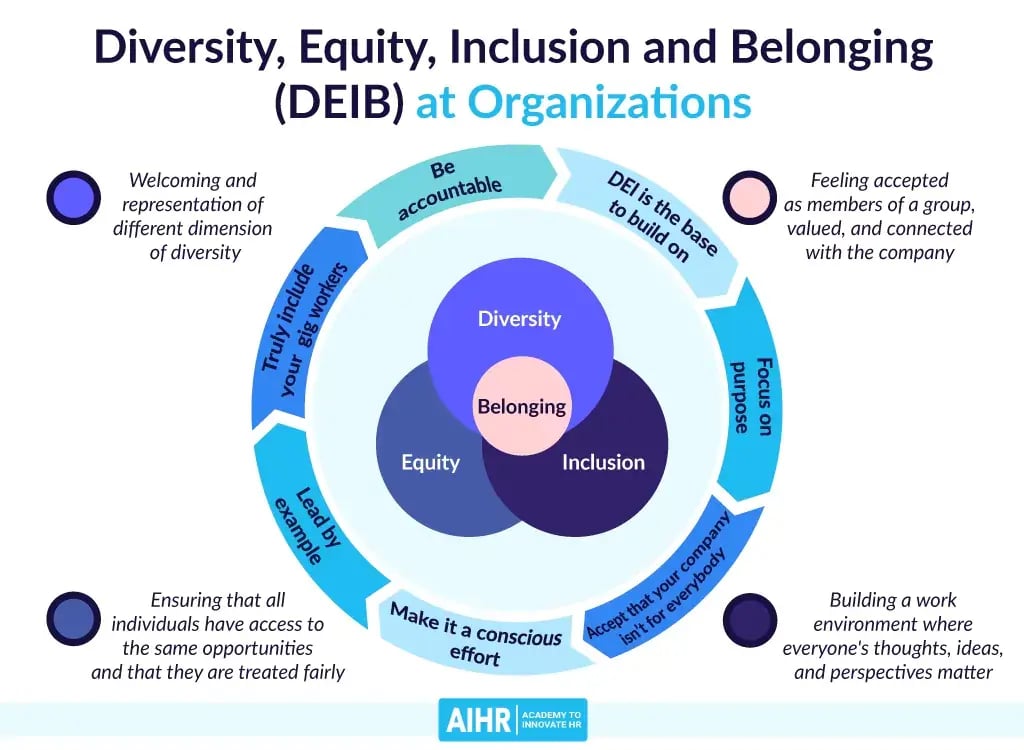
This hot topic is nothing new to us. We’ve read numerous articles explaining what it is and why it is important. The diagram above clearly captures how all the elements of DEIB fit into our organizations. In this blog post, we explore diversity, equity, and inclusivity, with an emphasis on belonging and why it is important. We look at DEIB’s prevalence in organizations and highlight what we believe are imperative DEIB capabilities and specialist skills to embed in your organization.
Before considering the importance of DEIB in organizations, let’s first look at what these mean in the world of work. Collective Health, a healthcare company striving to enable people to live their healthiest lives, published an educational piece for those considering DEIB for the first time. Collective Health defines DEIB as the following:
- Diversity : refers to how diverse a company is, not only in terms of race and gender but also sexual orientation, age, national origin, physical ability, religion, and more.
- Equity: represents how fair and impartial the workplace is to ensure that all employees have equal opportunities to grow and progress. It also means creating room for underrepresented voices, tackling unconscious biases, and providing inclusive, culturally competent care through your health plan.
- Inclusion : highlights the importance of creating a welcoming environment for all, not just ensuring that people are treated fairly. In policy and practice, employers should focus on ensuring that everybody is heard and can surface their opinions, not just those comfortable in the spotlight.
- Belonging : is the newest addition to DEIB values and the last part of the puzzle. It represents the affinity and positive relationships between employees of various backgrounds when businesses actively promote diversity, equity, and inclusion within the workplace
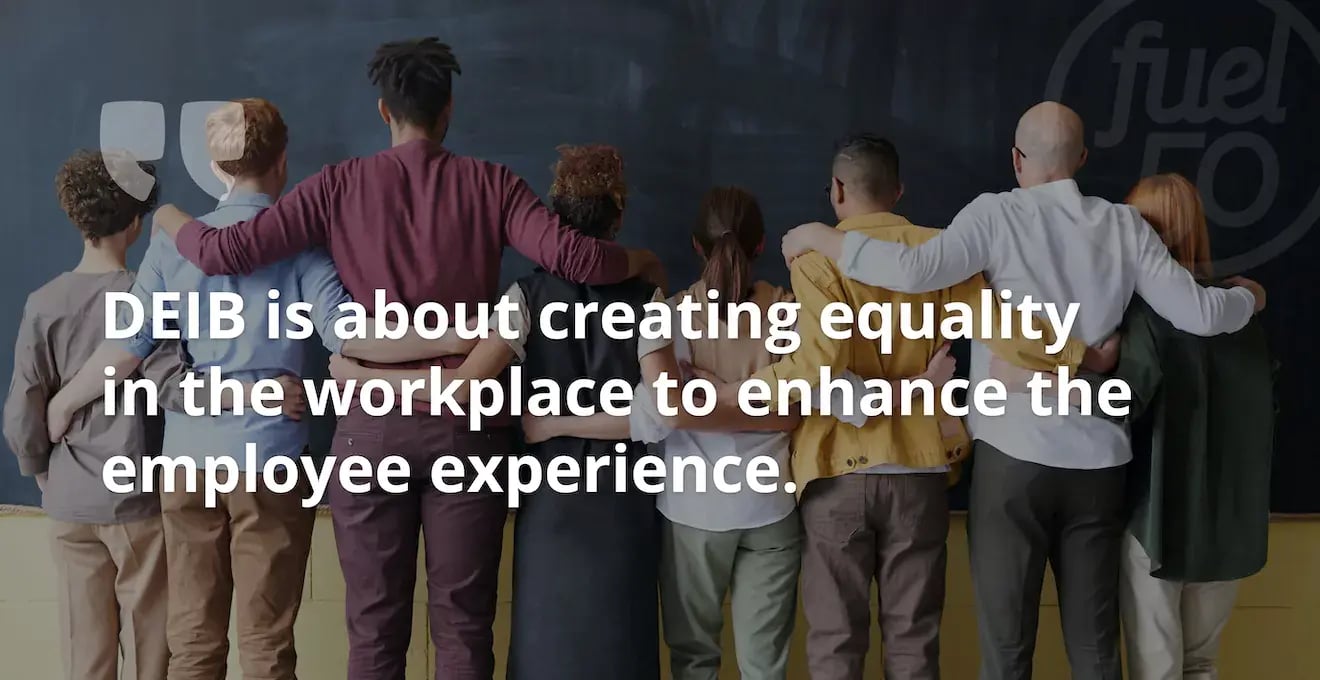
Collective Health promotes DEIB as more than an attempt to obtain targeted percentages. They believe that DEIB is about creating equality in the workplace to enhance the employee experience. At Fuel50, we are passionate about driving an amazing employee experience by ensuring your workforce strategy reflects the latest global capability trends. So, let’s consider why DEIB capabilities and specialist skills can help promote a great employee experience.
What is the benefit of focusing on diversity, equity, inclusivity and belonging?
Deloitte2, an industry-leading audit, consulting, tax, and advisory services consulting firm, found in a study that DEIB improves an organization’s competitive advantage within their industry by almost half (46%) and the quality of decision-making by just less than half (40%). A third (30%) of organizations reported improved financial performance after making DEIB a critical focus area in their businesses.
Academy to Innovate HR1, reports in a culture report3 that DEIB:
- Positively affects retention : 40% of respondents with a strong sense of belonging rarely consider looking for a job elsewhere.
- Boosts productivit : 45% of respondents with a strong sense of belonging say they are their most productive selves at work.
- Is the best kind of employer branding : 51% of respondents with a strong sense of belonging would recommend their company as a great workplace, versus 4% of those with a low sense of belonging.
Cigna Group4, a global healthcare company, lists ten statistics that demonstrate the benefit of diversity, equity, and inclusion (DEI) for businesses: